

If you work with older adults, whether as an activity director, caregiver, volunteer, or community staff member, you already know how much a calm, enjoyable activity can lift the room. Coloring groups are one of the simplest and most rewarding things you can offer.
They require very little equipment. They welcome every ability level. And they create something that tends to happen naturally in a good coloring session: people settle in, breathe a little easier, and start to talk.
This guide walks you through everything you need to know to start a coloring group at a senior center or care community, from gathering supplies to running your first session with confidence. You do not need to be an artist. You just need a warm space, a few good pages, and a willingness to try.
Why Coloring Groups Work So Well for Seniors
Coloring has a quiet kind of magic. It gives the hands something to do and the mind somewhere pleasant to rest. For older adults, that combination is genuinely valuable.
Research into therapeutic activities for aging adults consistently points to the benefits of creative, low-pressure tasks. Coloring, in particular, tends to work well across a wide range of cognitive and physical abilities, which makes it an ideal group activity for mixed-ability settings.
Here is why coloring groups are such a natural fit for senior communities:
Accessible to nearly everyone. Coloring does not require prior skill or experience. A participant who has never picked up a colored pencil can sit down and contribute meaningfully to the group on the very first day.
Calming and grounding. The rhythmic motion of coloring activates focus without strain. Many participants report feeling more relaxed and present during and after a session.
Encourages social connection. Side-by-side activity creates easy conditions for conversation. The pages give people something to talk about, color choices, themes, memories the images bring up, without requiring anyone to perform or compete.
Supports fine motor engagement. For older adults managing arthritis, reduced dexterity, or early-stage cognitive decline, gentle, purposeful hand movement is genuinely beneficial. Coloring provides this in a comfortable, self-paced way.
Produces a tangible result. Completing a page, even a small section, gives participants a sense of accomplishment. Many residents love displaying their finished pages, and families often take them home as keepsakes.
Flexible and repeatable. Unlike some group activities, coloring scales easily. You can run it with two people or twenty. You can hold it weekly, daily, or as a drop-in. The format adapts to your schedule and setting without losing its appeal.
For activity directors managing busy calendars and limited budgets, group coloring activities are also one of the most cost-effective programs you can offer. The supplies are simple, the setup is quick, and the activity runs itself once participants are settled.
Supplies You Actually Need
One of the most common reasons activity directors hesitate to start something new is the assumption that it will require a lot of preparation. For a coloring group, that is not the case. The supply list is short, and most items are already available in typical senior center budgets.
Here is what you actually need to get started:
Printed coloring pages. This is the heart of your program. Choose pages with bold, clear outlines and generous open spaces. Pages designed specifically for older adults, with thick lines and simple compositions, are far easier to work with than standard adult coloring books, which often contain intricate, tiny patterns that frustrate more than they relax. More on choosing the right pages in the next section.
Colored pencils. Colored pencils are the most forgiving tool for group coloring. They are clean, easy to control, and easy to share. Look for pencils with smooth pigment and a comfortable grip. Brands like Prismacolor, Crayola Twistables, or similar soft-core options work well for participants with varying levels of hand strength.
Broad-tip markers or gel pens. Some participants prefer markers for their ease, fewer strokes needed to fill a space. Keep a small selection available as an alternative. Washable markers are a practical choice for care settings.
A flat, well-lit table surface. Participants need enough room to spread out their page without crowding. Round or rectangular tables that seat four to eight people work best. Good overhead lighting reduces eye strain and makes colors easier to see.
A simple pencil sharpener. Keep one or two at each table. Nothing interrupts a calm session like a search for a sharpener.
Optional: light background music. Soft instrumental music can help set a calm, welcoming tone. Nature sounds, classical music, or gentle acoustic playlists work well. Keep the volume low enough that conversation is still easy.
You do not need specialty art supplies, expensive coloring books, or elaborate setup kits. A comfortable table, good lighting, and the right pages are the foundation of a successful coloring group.
If your budget allows for a small supplies investment, focus it on quality coloring pages and a good set of colored pencils. Those two things will make the biggest difference in participant experience.
Choosing Easy and Accessible Coloring Pages
Not all coloring pages are created equal, especially when it comes to senior-friendly group coloring activities. Many popular adult coloring books feature very fine, densely packed lines that require precision and patience. For older adults managing arthritis, reduced fine motor control, or low vision, those pages can feel more frustrating than relaxing.
When selecting pages for a senior coloring club or group session, look for these qualities:
Thick, bold outlines. A minimum line weight of 3 points is a helpful benchmark. Lines that are clearly visible reduce eye strain and make it easier for participants to color within or around the design without losing track of where they are on the page.

Open, generous spaces. Large areas to fill are more satisfying and less frustrating than tiny, intricate sections. Open spaces mean participants can make relaxed, sweeping strokes rather than careful, precise ones.
Simple, recognizable subjects. Flowers, birds, garden scenes, seasonal themes, and familiar objects tend to resonate strongly with older adults. Recognizable imagery can also spark gentle conversation and positive memories.
A single focal design per page. Pages with one clear subject, a large rose, a single bird, a simple cottage, are easier to engage with than pages covered in repeated small patterns. One clear subject lets participants settle into the image rather than feeling overwhelmed by where to begin.
Standard 8.5 x 11 letter-size format. This prints cleanly on any standard home or office printer and fits comfortably on a table.
High-contrast printing. Print pages at the highest quality your printer allows. Faint or grey lines are harder to see and work around, especially for participants with low vision.
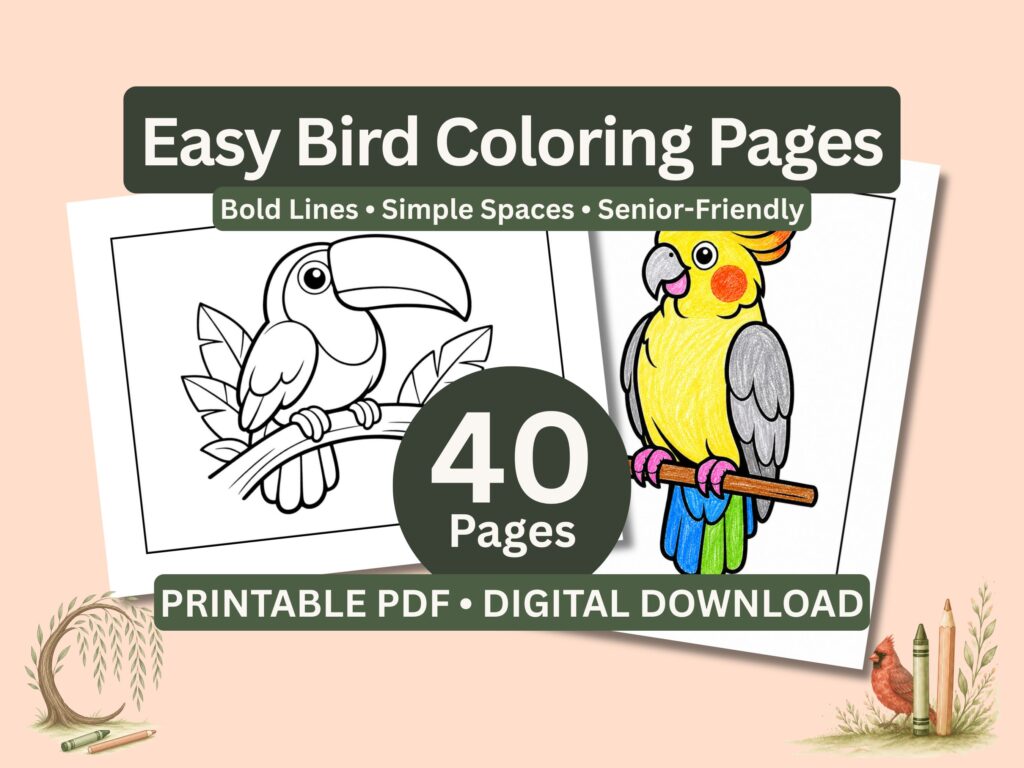
Coloring Willow pages are designed with exactly these qualities in mind. Every page uses bold outlines and open spaces created specifically for adults who want to color comfortably, without the frustration of tiny or complicated designs. If you are looking for activity director printables that you can use reliably across multiple sessions and ability levels, the Coloring Willow collections are worth exploring.
How to Set Up a Calm Coloring Space
The environment matters as much as the activity itself. A well-arranged space communicates to participants that this time is meant to be peaceful and enjoyable. It does not take long to set up, but a few thoughtful touches make a real difference.
Arrange tables to encourage connection. Seat participants facing or angled toward each other, rather than all in a row. Round tables work especially well. The goal is easy eye contact and natural conversation, not isolation.
Pre-sort supplies before participants arrive. Place a small selection of colored pencils, a few markers, and a sharpener at each table before the session begins. Having everything ready removes any friction at the start and lets participants settle in immediately.
Provide one page per participant, plus a few extras. Set a printed page at each seat before the group arrives. Having extras allows participants to choose a different image if one does not appeal to them, and gives late arrivals something to work with right away.
Keep the room at a comfortable temperature. This is simple but important. A room that is too cold or too warm will distract from the activity. Aim for a relaxed, comfortable environment.
Consider lighting carefully. Natural light is ideal. If you are working in a space without good natural light, ensure overhead lighting is bright and even. Avoid harsh fluorescent lighting if possible, warm-toned bulbs are easier on the eyes.
Set a calm tone from the moment people enter. Greet participants warmly. If you are playing background music, have it on before the group arrives. A welcoming atmosphere at the door helps participants shift into a relaxed mindset before they even sit down.
Step-by-Step Plan for Your First Session
Your first session does not need to be perfect. It just needs to be comfortable and welcoming. Here is a simple structure you can follow:
Step 1: Prepare the space (15 minutes before the session). Arrange tables and chairs. Set out supplies. Place a coloring page at each seat. Start any background music. Make sure lighting is good.
Step 2: Welcome participants as they arrive. Greet each person by name if you know them. Invite them to take a seat and let them know what the session is about. Keep your introduction brief and warm: something like, “Today we are just going to relax and color together. There is no right or wrong, just enjoy yourself.”
Step 3: Give a short, simple orientation. Once most participants are seated, spend two or three minutes explaining how the supplies are organized and how the session will work. Let participants know they can choose any colors they like, work at their own pace, and switch pages if they would like a different image.
Step 4: Let the session begin naturally. You do not need to direct the activity once it is underway. Move around the room, offer gentle encouragement, and let conversation develop naturally. Resist the urge to hover or offer unsolicited guidance on color choices, the freedom to choose is part of what makes coloring enjoyable.
Step 5: Circulate and connect. Visit each table during the session. Ask open questions: “What did you decide to color that flower?” or “Does this scene remind you of anywhere you have been?” These gentle prompts invite conversation without pressure.
Step 6: Wrap up warmly. With about five minutes remaining, let participants know the session is coming to a close. Invite anyone who would like to share their page to hold it up or place it somewhere visible. Collect supplies, thank everyone for joining, and let them know when the next session will be.
Step 7: Note what worked. After participants leave, take a few minutes to note which pages were most popular, what the energy of the room was like, and anything you might adjust for next time. Over time, these observations will help you refine the program into something participants genuinely look forward to.
Tips for Encouraging Participation
Not every participant will join enthusiastically at first. Some may be hesitant, unsure of their artistic abilities, or simply cautious about trying something new. Here are a few gentle strategies for encouraging participation without pressure:
- Lead with the social aspect, not the art. Frame the group as a chance to sit together and relax, rather than an art class. Many participants who might hesitate at “art” will readily join for “a quiet get-together.”
- Start with familiar, appealing themes. Flowers, birds, and garden scenes tend to draw people in quickly. A beautiful page that someone recognizes and responds to is an easy entry point.
- Invite hesitant participants to just come and watch. Telling someone they can simply sit and keep others company, with no obligation to color, often results in them picking up a pencil within a few minutes. Watching others engaged in a calming activity is its own kind of invitation.
- Emphasize that there is no wrong way. Some participants worry about coloring “incorrectly” or choosing the wrong colors. Remind them gently and genuinely: this is not a test. Any color choice is the right one.
- Celebrate what participants create. A simple “that looks lovely” or “those colors work so beautifully together” can mean a great deal. Genuine, specific encouragement builds confidence and enjoyment over time.
- Display finished pages with permission. Creating a small bulletin board or display area for completed coloring pages gives participants a sense of pride and recognition. It also signals to newcomers that this is a welcoming, affirming activity.
Making Coloring Sessions Social and Relaxing
The best coloring sessions are not entirely silent, and they are not chaotic either. They find a natural, unhurried middle ground, the kind of comfortable atmosphere where conversation flows easily and people feel no pressure to perform.
Here are a few ways to encourage that balance:
Use themed pages to spark conversation. A page featuring a garden scene might prompt someone to share memories of their own garden. A bird image might lead to a story about birdwatching. Seasonal and holiday pages tend to bring up warm personal memories, which are wonderful starting points for shared conversation.
Rotate pages periodically. Offering a new themed pack every few sessions keeps the activity feeling fresh. Participants enjoy having something to look forward to, and fresh designs maintain engagement over the long term.
Try an occasional group project. Give each participant a page from the same pack or theme, and at the end of the session, arrange the completed pages together as a collective display. Group projects build a sense of shared accomplishment and community.
Pair coloring with light refreshments. A cup of tea or coffee and a simple snack can elevate a coloring session into something that feels like a genuine social occasion. Participants often linger longer and connect more naturally when the setting includes a small comfort.
Keep the pacing gentle. Resist the urge to fill every moment with structured activity. Some of the best moments in a coloring group are the quiet, companionable ones, when people are simply sitting together, working on their pages, and feeling at ease. That ease is the point.
Common Mistakes to Avoid
Even with the best intentions, a few common missteps can make coloring sessions feel less welcoming than they should be. Here is what to watch for:
Choosing pages that are too complex. Fine-lined or intricate pages are the most common mistake. When participants struggle with small spaces, the activity stops being relaxing. Always prioritize bold lines and open spaces, especially for groups that include participants with arthritis or low vision.
Treating it like an art class. Offering unsolicited corrections, “you might want to try a different color here” or “that line is outside the border”, quickly undermines confidence and enjoyment. Coloring groups work best when there is no evaluation and no hierarchy of right answers.
Overlooking quieter participants. In any group, some participants naturally talk more than others. Make a point of checking in with quieter members, asking a simple question or offering a word of encouragement. Everyone deserves to feel included.
Running sessions inconsistently. Participants who enjoy the group will start to look forward to it. If sessions are cancelled frequently or held irregularly, it is harder to build the sense of routine and anticipation that makes a program feel like a real part of community life.
Using poor-quality printouts. Faint lines, blurry images, or pages printed at low resolution are harder to work with and less satisfying to color. Print at the highest quality your printer allows, and replace worn or faded pages promptly.
Assuming all participants have the same needs. Some participants may need larger-grip pencils due to arthritis. Others may need a page placed on a clipboard for a more comfortable working angle. Paying attention to individual needs and offering small adaptations makes the group more accessible and more enjoyable for everyone.
Printable Themes Seniors Tend to Enjoy Most
While individual preferences always vary, certain themes tend to resonate consistently and warmly with older adult participants. If you are building a collection of coloring pages for your program, these are excellent starting points:
Flowers and botanicals. Roses, daisies, sunflowers, and garden arrangements are perennial favorites. Floral pages evoke warmth, beauty, and nature, and they tend to attract participants who might otherwise feel uncertain about joining a coloring group.
Birds and nature scenes. Birds in particular are a popular subject among older adults, many of whom have spent years enjoying birdwatching. A bold cardinal, a garden robin, or a collection of songbirds on a branch tends to generate real enthusiasm.
Seasonal and holiday themes. Pumpkins and autumn leaves, Christmas wreaths, spring tulips, and Fourth of July scenes all connect participants to the rhythm of the year and to personal memories. Rotating seasonal pages keeps the program feeling timely and relevant.
Cozy domestic scenes. Cottages, teacups, kitchen windows, and garden gates evoke a sense of comfort and familiarity that many older adults find genuinely calming. These scenes often spark warm conversation about homes, memories, and everyday pleasures.
Faith-based and inspirational designs. For senior communities with a faith tradition, pages featuring simple Scripture verses, crosses, or peaceful spiritual imagery can be especially meaningful. Offering these pages alongside other themes allows participants to choose what resonates with them.
Simple animal portraits. Cats, dogs, rabbits, and gentle wildlife images are broadly appealing and tend to prompt smiles and conversation, particularly among participants who are fond of animals.
When building your page collection, aim for variety across these themes so that each session feels a little different and participants can choose what appeals to them on a given day.
Group Licensing and Printable Bundles
One important consideration for activity directors and facility staff is the question of licensing. Most printable coloring pages, including those sold on Etsy or individual creator websites, are sold under personal use licenses, which typically cover one individual or household.
When you are printing pages for a group coloring activity at a senior center, care facility, or retirement community, you are using those pages in a group or commercial context. It is both ethical and legally important to use pages covered by a group or facility use license.
Coloring Willow offers group use licenses designed specifically for senior centers, care facilities, memory care communities, and activity programs. A group license allows you to print pages as many times as needed for your participants, without worrying about copyright compliance.
This matters for a few practical reasons:
- Legal compliance. Using properly licensed materials protects your organization and ensures you are operating within the terms of use.
- Consistent access. A group license gives you ongoing access to a full collection, so you can plan sessions weeks or months in advance without needing to purchase new individual items each time.
- Supporting creators. Small creators who design accessible, high-quality pages for older adults depend on appropriate licensing to sustain their work. Using the right license helps ensure that good resources continue to exist.
Coloring Willow’s printable bundles are organized by theme, florals, birds, seasonal collections, faith-based pages, and more, and are available in multi-pack formats suited to program planning. If you are running regular group coloring activities, a bundle with a group license is the most practical and cost-effective way to build a reliable page library.
If you have questions about which license is right for your facility or how to use printables within your program, feel free to reach out, there is always a helpful answer waiting.
One Last Thought on Coloring Groups
Starting something new can feel a little uncertain, even when you know it is a good idea. If you have been thinking about adding a coloring group to your program calendar, this is your gentle encouragement to begin.
You do not need a perfect plan or a large budget. You need a table, some pencils, a few good pages, and the willingness to sit with your participants and let the session find its own quiet rhythm.
The conversations that happen over a coloring table are often some of the warmest and most genuine in a senior community. People open up when their hands are busy and the pressure is off. That is the real gift of a coloring group, not the finished pages, but the moments of ease and connection that happen while making them.
Start small. Start whenever you are ready. And enjoy what unfolds.
3 thoughts on “How to Start a Coloring Group at a Senior Center (Step-by-Step)”