Many adult coloring pages are beautiful, but they are not always easy to use. Some designs are crowded with small spaces, fine lines, and intricate patterns that can feel demanding rather than relaxing.
Adaptive coloring pages offer a more flexible approach. Instead of giving everyone one version of a design, they present three versions of the same focal subject, usually with different levels of detail or complexity.
The goal is not to label one version as better than another. The goal is to let the colorist choose the page that feels most comfortable that day. This can be especially useful for adults who prefer larger spaces, clearer outlines, simpler details, or less pressure to color small areas.
What Are Adaptive Coloring Pages?
Adaptive coloring pages are printable coloring pages that offer more than one version of the same subject, so the colorist can choose the design that feels most comfortable to use.
The core concept is simple:
- The same focal subject appears in each version.
- Each pack includes three page versions.
- Each version uses a different level of detail.
- The theme and composition stay consistent across versions.
- The colorist gets more choice, not less quality.
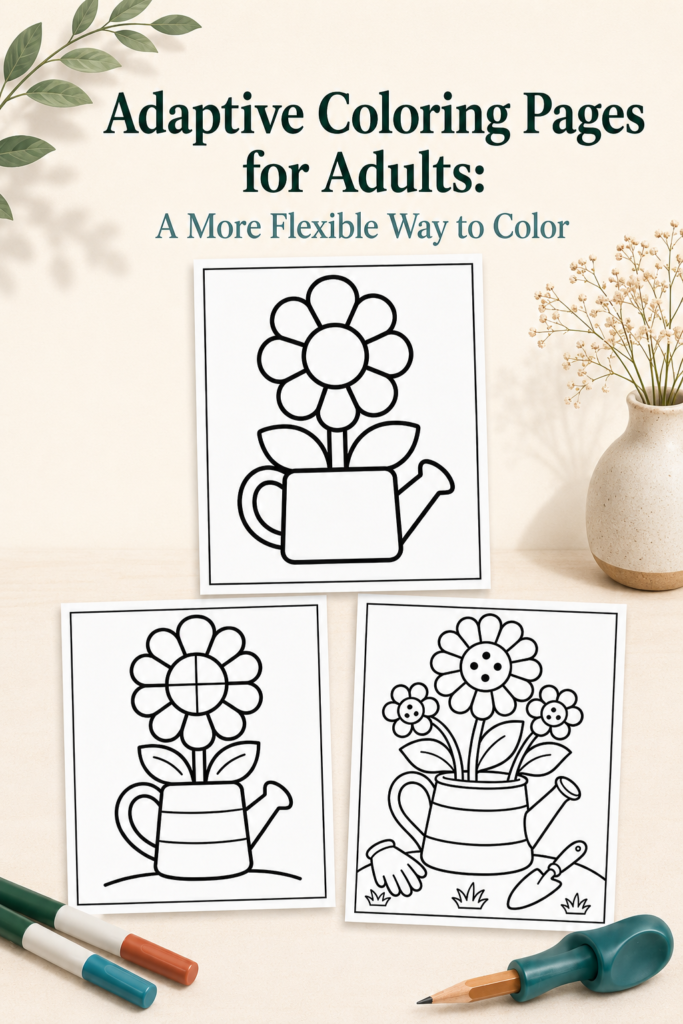
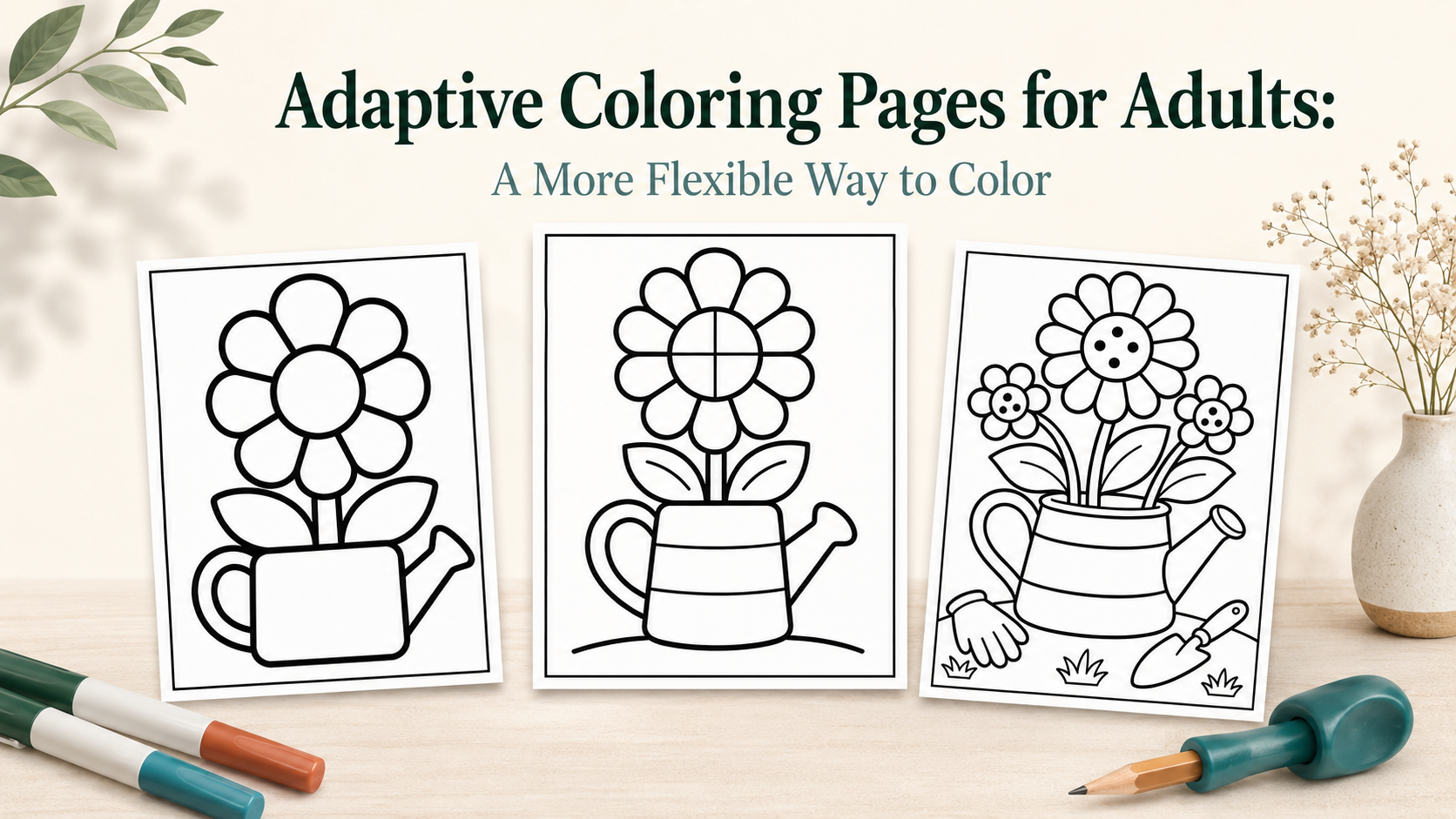
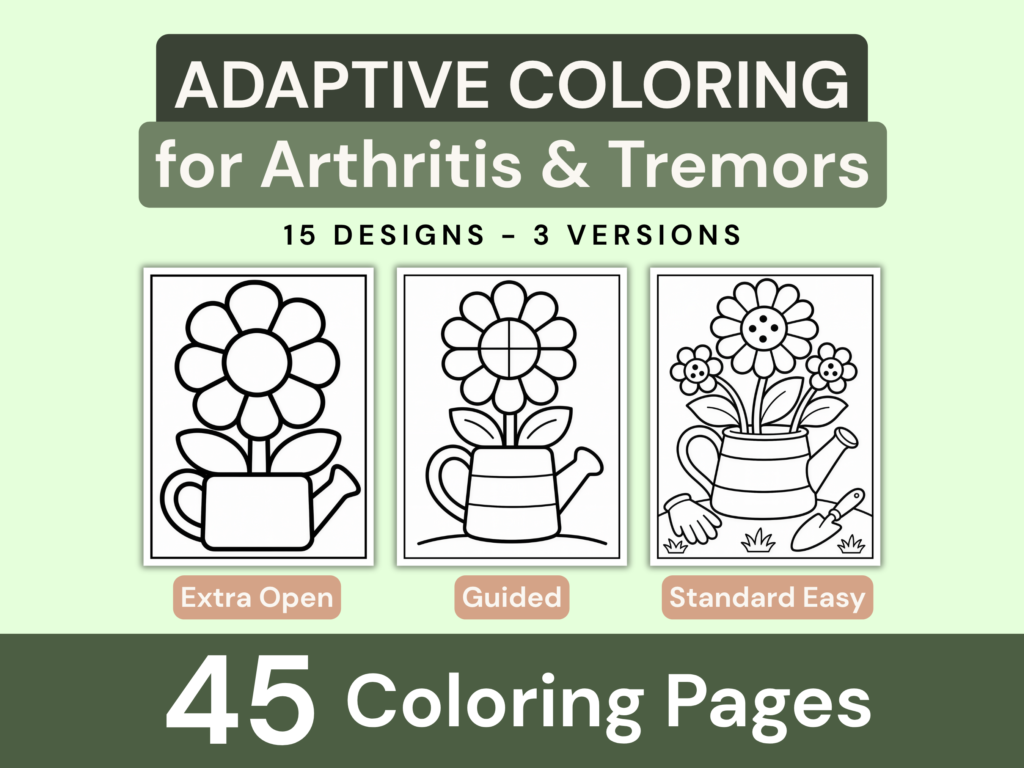
For example, a flower page might include three versions:
- A simple version with large petals, minimal detail, and bold outlines.
- A moderate version with a few extra leaves, petal lines, or small background accents.
- A more detailed version with additional pattern, texture, or smaller spaces.



All three versions can still be adult-appropriate and respectful. A simpler design does not mean a childish one.
Why One Coloring Page Does Not Fit Everyone
Colorists vary widely in vision, dexterity, energy level, attention, coloring experience, tool preference, and personal taste. Someone may enjoy detailed coloring one day and prefer a simpler page the next.
This variation matters most when coloring is meant to feel accessible rather than frustrating. A page that works well for one person on one day may not work as well for the same person on another day.
Some adults prefer designs with larger spaces and fewer small details. Others enjoy the challenge of texture and pattern. Neither preference is more correct than the other. Offering more than one version simply respects that people are different, without assuming what any one person needs.
How the Three-Version Format Works
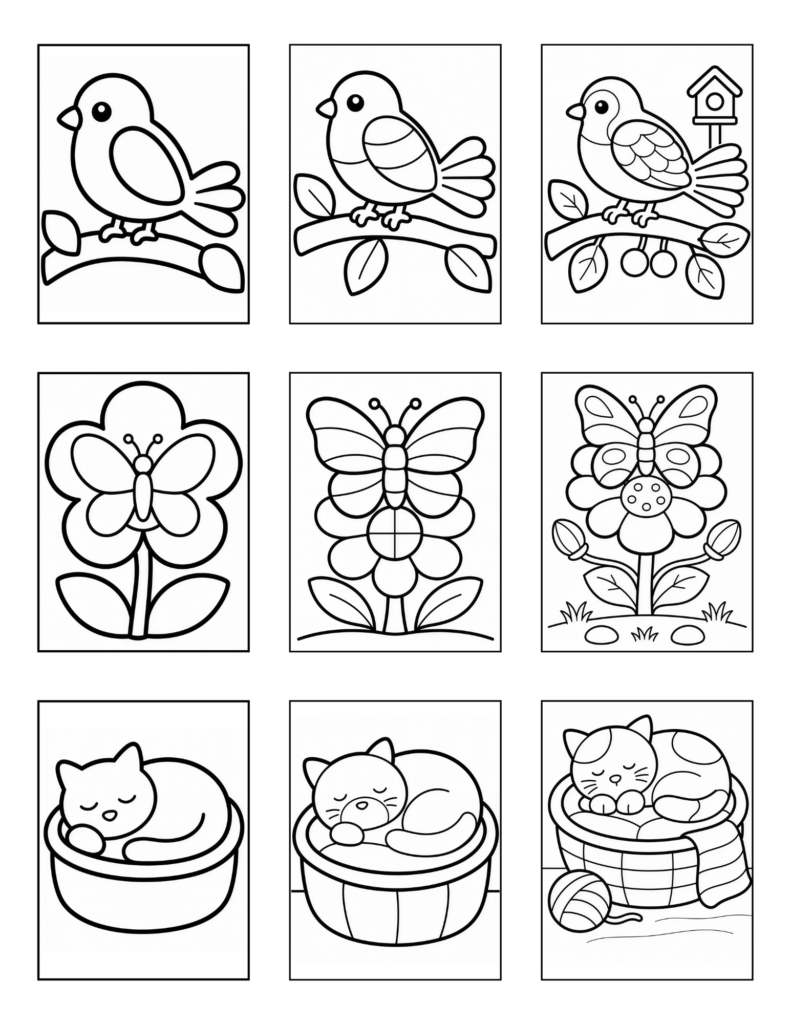
Adaptive coloring pages typically follow a simple structure: one subject, three levels of detail.
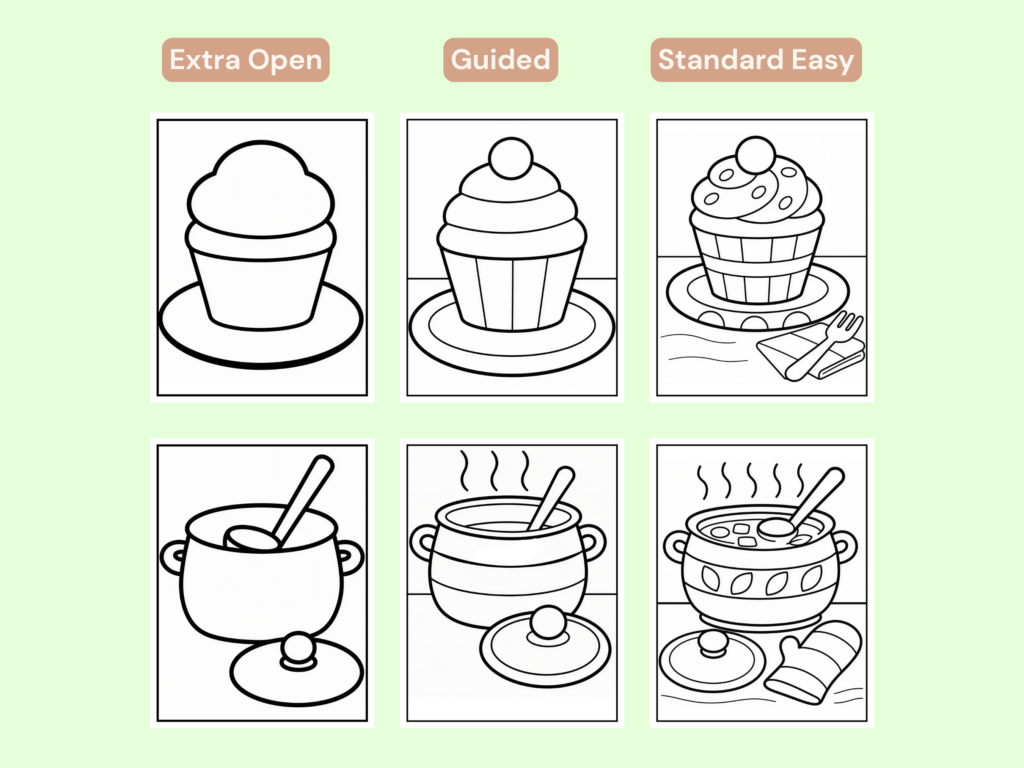
Version One: Simple and Open (Extra Open)
This is the easiest version to approach. It typically includes:
- The largest coloring spaces
- The fewest interior lines
- One clear focal subject
- Minimal or no background
- Bold outlines
- Reduced visual clutter
This version tends to work well for shorter coloring sessions, broad-tip markers or crayons, and anyone who prefers open shapes or a lower-pressure page.

- 12 CRAYOLA MARKERS: 12 dazzling Crayola Broad Line Markers to ignite your artistry & celebrate your chromatic flair!
- BROAD LINE MARKERS: Boldly craft powerful expressions, master shading & layering, & explore boundless creativity.
- WASHABLE FORMULA: Fear stains no more! Ultra Clean Washable Markers wash easily from skin, clothes, & surfaces.
Version Two: Balanced Detail (Guided)
This middle version keeps the same subject but adds a bit more visual interest while remaining clear and manageable. It may include a few extra details or supporting elements.
This version tends to suit colorists who want some detail without a crowded page, colored pencils or medium-tip markers, and slightly longer sessions that still feel comfortable.
Version Three: More Detailed (Standard Easy)
This is the most involved version of the subject. It may include more texture or decorative areas, more small spaces, and more opportunities for color variation, while still showing the same core subject.
This version tends to appeal to adults who enjoy more involved coloring, colorists who want a longer activity, and people who like adding shading, patterns, or multiple colors.
Who May Prefer Adaptive Coloring Pages?
Adaptive coloring pages may be useful for a wide range of colorists, including:
- Adults who dislike tiny spaces
- Seniors who prefer clearer page layouts
- People who enjoy having choices
- Caregivers looking for flexible printable activities
- Activity directors planning mixed-ability groups
- Adults who want simpler pages some days and more detailed pages on others
- Memory care or assisted living settings where page choice matters
Adaptive coloring pages may be helpful when a group includes people with different preferences, energy levels, or comfort with detail. They are not suitable for every person in every situation, and the best version is simply the one the person wants to use.
Why Choice Matters in Coloring Activities
Choice helps a coloring activity feel adult and personal rather than prescribed. Offering three versions avoids assuming what someone can or cannot do.
A simpler version does not need to be presented as easy. A more detailed version does not need to be presented as advanced. The colorist can choose based on comfort, interest, available time, or mood, without any version being framed as a judgment of ability.
Instead of saying, “This page is the right level for you,” adaptive coloring pages quietly offer options. This approach fits well with a broader focus on autonomy and flexible participation: activities work best when they support choice rather than test performance.
Adaptive Coloring Pages vs. Regular Coloring Pages
| Feature | Regular Coloring Pages | Adaptive Coloring Pages |
|---|---|---|
| Page options | Usually one version | Three versions of the same subject |
| Detail level | Fixed | Choice of simple, balanced, or more detailed |
| Flexibility | Limited | More adaptable |
| Group use | May not suit everyone | Easier to offer options |
| User control | Colorist chooses colors | Colorist chooses both page version and colors |
Regular coloring pages can still be enjoyable and useful on their own. Adaptive coloring pages simply add another layer of choice for colorists who want it.
How to Choose the Right Version
A few simple questions can help narrow down which version to try first.
- Start with interest. Choose a subject the person likes.
- Look at the size of the spaces. Larger spaces may feel more comfortable for broad coloring tools.
- Consider the coloring tool. Markers, crayons, and colored pencils each work a little differently on a page.
- Think about time and energy. A simpler version may suit a shorter session.
- Let the colorist decide. Offer two or three versions and let the person choose.
There is no need to finish the page. Coloring part of a design is still a valid way to participate.
Tips for Caregivers and Activity Directors
For anyone preparing coloring activities for others, a few small choices in presentation can make a real difference:
- Print all three versions before the activity.
- Offer the pages side by side rather than one at a time.
- Avoid describing one page as being for people who cannot do the harder one.
- Ask, “Which version looks most comfortable today?”
- Let participants switch versions freely.
- Keep extra copies on hand.
- Use thicker paper if coloring with markers.
- For groups, lay different versions on a table and let people choose their own.
Facilitator Tip: Present the versions as choices, not levels. This keeps the activity respectful and avoids making the colorist feel tested.
How the pages are offered matters as much as the pages themselves. Presented well, an adaptive format feels empowering. Presented poorly, it can feel like a judgment of ability.
What to Look for in Adaptive Coloring Pages
Not every product labeled “adaptive” delivers meaningful differences between versions. When evaluating a pack, look for:
- One clear focal subject
- Bold, clean outlines
- Large fillable areas
- Versions that are meaningfully different from one another
- Adult-appropriate design
- Minimal clutter
- A printable PDF format
- Clear page previews
- Simple instructions
- No pressure to complete every page
“Adaptive” should mean more than resizing the same image three times. The three versions should offer real differences in detail, visual load, and coloring space.
Printable Adaptive Coloring Pages From Coloring Willow
Coloring Willow’s printable coloring pack is built around this three-version concept. Each focal subject is provided in multiple versions, so the colorist can choose the page that feels most comfortable to use.
You can view the adaptive coloring pages for adults to see the format in practice.
This is a digital download. Files are delivered as printable PDFs, with no physical item shipped.
Frequently Asked Questions
Are Adaptive Coloring Pages Only for Seniors?
No. Adaptive coloring pages can be used by adults of different ages. They may be especially useful for seniors, caregivers, activity directors, and adults who prefer coloring pages with more choice and flexibility.
Are Simpler Coloring Pages Childish?
No. A coloring page can be simple, clear, and adult-appropriate at the same time. The subject matter, composition, line quality, and overall presentation are what determine whether a page feels respectful for adults, not the amount of detail alone.
Should I Start With the Simplest Version?
Not necessarily. It often works best to let the colorist choose. Some people may prefer the simplest version, while others may enjoy the balanced or more detailed option from the start.
Can Adaptive Coloring Pages Be Used in Groups?
Yes. They can work well in groups because participants can color the same subject while each choosing the version that suits them.
Final Thoughts About Adaptive Coloring Pages
Adaptive coloring pages make coloring more flexible by offering three versions of the same subject. This lets the colorist choose based on comfort, interest, available time, and preferred level of detail.
The purpose is not to assign a difficulty level to a person. The purpose is to offer options.
To see an example of this format, visit Coloring Willow’s printable adaptive coloring pages for adults.