Disclosure: This article may contain affiliate links. As an Amazon Associate, I earn from qualifying purchases. If you make a purchase through these links, Coloring Willow may earn a commission at no additional cost to you.
Coloring is one of those quietly wonderful activities. It asks nothing complicated of you. You simply sit, choose a color, and move gently across the page. For many people, it is the most peaceful part of the day.
But if your hands have been giving you trouble lately, stiffness in the mornings, aching joints, a grip that tires more quickly than it used to, you may have found that not every coloring tool makes things easier. Some pencils require too much pressure. Some markers feel thin and hard to hold. And that frustration can take away the very calm that coloring is supposed to bring.
This guide is here to help. We have gathered honest, practical recommendations for coloring supplies that are gentler on arthritic hands, tools that feel comfortable, require less effort, and make it easier to enjoy every page. Whether you are shopping for yourself or looking for ideas to share with someone you care for, we hope you find something useful here.
Why Coloring Tools Matter More Than People Realize
It is easy to assume that a colored pencil is just a colored pencil. But if your hands are sensitive, the difference between one tool and another can be significant. Some pencils require firm, repeated pressure to lay down color, which can tire the hand quickly. Others glide smoothly with very little effort, making it possible to color for longer without discomfort.
The same is true of grip. A slim, lightweight pencil may slip in hands that have lost some strength. A slightly wider barrel with a soft texture gives the fingers something to hold comfortably without gripping hard.
When you choose the right tools, coloring becomes what it was always meant to be, a gentle, restful activity. When the tools work against you, it becomes a source of strain rather than relief. A little thought at the start makes all the difference.
Common Hand Challenges Seniors Experience
Arthritis affects different people in different ways. Some notice it most in the knuckles. Others feel it in the wrist, or find that the whole hand fatigues faster than it once did. A few common experiences tend to come up when seniors talk about coloring:
- Grip fatigue. Holding a slim tool for an extended period can cause the hand to tire. The smaller the barrel, the harder the fingers have to work to keep it steady.
- Pressure sensitivity. Pressing down firmly to get a good, even color can aggravate inflamed joints. Tools that deposit color easily, with minimal force, are far more comfortable.
- Reduced range of motion. Fine, detailed movements become more difficult when joints are stiff. Larger coloring spaces and tools that do not require precise control help considerably.
- Tremor or shakiness. Even mild hand tremor makes staying within tiny lines feel impossible. Bold outlines and generous coloring spaces remove that worry entirely.
What Makes a Coloring Tool Easier to Hold
Before we get into specific products, here are the qualities to look for. Keeping these in mind will help you evaluate any tool, even ones not mentioned here.
- Wider barrel. A thicker body means you do not need to squeeze as tightly. Triangular barrels are particularly helpful because they rest naturally in the groove between the fingers.
- Soft texture or rubberized grip. A smooth, hard pencil can slip and require more tension in the hand. A soft grip section gives fingers something to rest into without effort.
- Soft, creamy pigment. Pencils and crayons that glide on easily, rather than needing to be pressed and pressed, reduce the strain on finger joints significantly.
- Lightweight design. Heavy tools tire the hand more quickly. Lighter materials, including some plastic-bodied markers, are much easier to manage over a longer coloring session.
- Broad, chisel, or brush tip for markers. A wider tip covers more space with each stroke, which means fewer passes and less repetitive hand movement.
3 Best Colored Pencils for Arthritic Hands
Colored pencils are a favorite for many colorists because they offer control, blend beautifully, and do not bleed through paper. Here are three options that tend to be much gentler on the hands than standard pencils.
1. Prismacolor Premier Colored Pencils

- WIDE COLOR RANGE: Available in a vibrant set of 150 assorted colors
- SOFT THICK CORES: Perfect for shading and creating shadows
- BRILLIANT PIGMENTS: Lightfast, richly saturated pigments for stunning color saturation
Prismacolor Premier pencils are often the first recommendation for anyone who finds coloring physically tiring. Their cores are thick and waxy, which means the color lays down with very little pressure. You do not need to press hard or go over an area repeatedly to get a rich, even result.
- What works well: Extremely soft application, vibrant colors, and good blending. The wide color range means you rarely need to press down to deepen a shade.
- Worth knowing: The barrel is relatively slim, so adding a pencil grip accessory (described later) makes a noticeable difference for those with hand fatigue. They are also a little more expensive than beginner pencils, but a set of 24 or 36 is more than enough to get started.
2. Crayola Twistable Colored Pencils

- CRAYOLA TWISTABLES CRAYON SET: This kids’ coloring set includes 50 Crayola Mini Twistable Crayons, perfect for little ha…
- LESS MESS COLORING: Unlike traditional crayons, Crayola Twistable Crayons require no peeling or sharpening, making them …
- DURABLE AND LONG-LASTING: Made with high-quality materials, these crayons for toddlers and kids are built to last.
Do not let the familiar name put you off, Crayola’s Twistable colored pencils are genuinely excellent for seniors. The twist-up mechanism means there is no sharpening required, which removes a step that can be fiddly and tiring. The wider plastic barrel is naturally easier to hold, and the pigment is soft enough to apply comfortably.
- What works well: No sharpening needed, wider grip surface, soft application, and very affordable. A wonderful starting point.
- Worth knowing: The color range is smaller than professional pencils, and the pigment is not quite as rich. But for casual, relaxing coloring, they are comfortable and easy to use.
3. Stabilo EASYcolors Ergonomic Colored Pencils
Stabilo designed these pencils specifically with an ergonomic grip in mind. The triangular barrel encourages a natural, relaxed hold and takes pressure off the fingers. The indentations on the side help the pencil stay put without the hand needing to grip tightly.

- These pencils are specially designed for right-handers.
- Its triangular shape and moulded grip zones promote the dynamic tripod grip
- With the moulded grip zones along the whole shaft of the pencil kids still have a benefit even after sharpening.

- These pencils are specially designed for left-handers.
- Its triangular shape and moulded grip zones promote the dynamic tripod grip
- With the moulded grip zones along the whole shaft of the pencil kids still have a benefit even after sharpening.
- What works well: Thoughtfully shaped for comfort, easy grip, and a soft core that applies well without excessive pressure. A great choice for those whose main challenge is holding the pencil steadily.
- Worth knowing: These come in left-handed and right-handed versions, which is a nice touch. The color selection is smaller than dedicated art pencil ranges, but the comfort factor more than compensates.
3 Best Markers for Easy Coloring
Markers are a wonderful option for seniors because they deliver rich color with almost no pressure at all. You are essentially just guiding the tip across the page, which is much kinder to stiff or sore hands. Here are three that work especially well with large-print coloring pages.
1. Crayola Broad Line Markers
Crayola’s broad line markers are a reliable, affordable choice that many seniors already have at home. The broad tip covers a large area with a single stroke, which is ideal for the generous open spaces found in large-print and bold-line coloring designs. The barrel is comfortable to hold, and the colors are bright and satisfying.
- What works well: Very affordable, widely available, easy to hold, and the broad tip fills large spaces quickly with minimal hand movement.
- Worth knowing: These markers can bleed through thin printer paper, so printing on a slightly heavier paper stock (or placing a spare sheet underneath) gives better results.
2. Tombow Dual Brush Pens
Tombow markers have a soft, flexible brush tip on one end and a finer tip on the other. The brush end is particularly easy on the hands because you can use it at almost any angle and it still lays down color smoothly. There is no need for precise control, which makes it a joy for those with limited wrist mobility.
- What works well: Extremely forgiving tip that works at multiple angles, beautiful blendable colors, and a comfortable grip. The dual-tip design adds flexibility for those who occasionally want to add a small detail.
- Worth knowing: Tombow pens are on the pricier side and are typically sold individually or in small sets. They are worth the investment for those who color regularly and want something that feels genuinely lovely to use.
3. Faber-Castell PITT Artist Brush Pens
These PITT Artist brush pens use India ink, which dries quickly and does not smudge, helpful for those who rest their hand on the page as they color. The brush tip is flexible and easy to use, and the ink glides on beautifully with almost no resistance. They come in a lovely range of warm, natural colors that suit floral and nature-themed designs particularly well.
- What works well: Quick-drying, smudge-resistant, wonderful colors, and a soft flexible tip that does not require pressure or precise movement.
- Worth knowing: Like Tombow, these are an investment rather than a budget pick. But for someone who loves coloring and wants a truly comfortable experience, they are a delight.
Helpful Accessories and Pencil Grips
You do not always need to replace your existing pencils. Sometimes, a small accessory makes all the difference.
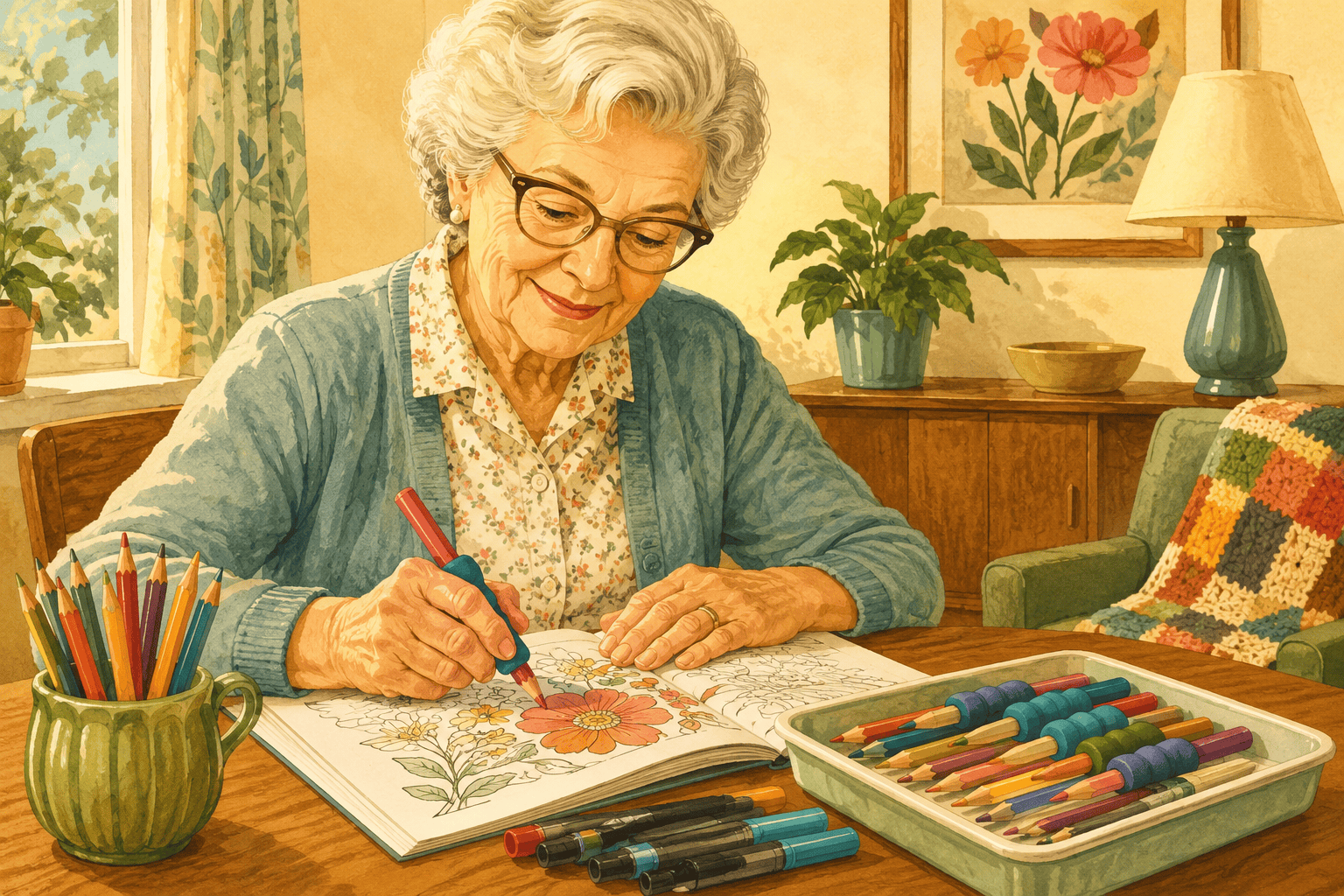
- Foam pencil grips. These slip over the barrel of any standard pencil and make it wider, softer, and easier to hold. They are inexpensive and can be found at most office supply or craft stores. They are particularly helpful if you already have pencils you love but find the barrel too slim.
- Stetro or triangular grips. These small rubber accessories fit over a pencil and guide the fingers into a natural, relaxed position. They are commonly used in occupational therapy settings and are excellent for those whose fingers tend to curl or tense during coloring.
- Weighted gloves. For those dealing with mild tremor, a lightly weighted glove can help steady the hand. These are worth looking into with a therapist or doctor if tremor is a concern.
- A clipboard or slanted board. Coloring on a flat table can put strain on the wrist. Propping your page on a clipboard at a slight angle, or using a portable drawing board, allows the wrist to stay in a more natural position, which many find far more comfortable over time.
- Hand stretches before coloring. A few gentle stretches before picking up a pencil can make a real difference. Opening and closing the hand slowly, rolling the wrists, and lightly massaging the knuckles all help to warm the joints before a coloring session.
Paper and Printing Tips for Easier Coloring
The surface you color on matters more than most people expect. Standard printer paper is a fine start, but a slightly heavier paper makes a meaningful difference, both in how the color looks and how much pressure you need.
- Try 65 to 80 lb cardstock. This weight of paper holds color beautifully, resists bleeding from markers, and has a slightly smoother feel under pencils. It is easy to find at any office supply store and fits in a standard home printer.
- Print one page at a time. There is no need to print an entire pack at once. Printing a single page when you are ready to color keeps things simple and means you are always working on something fresh.
- Use a light table or a bright lamp. Good lighting reduces eye strain and makes it much easier to see the outlines clearly, especially for those with any vision changes. A small clip-on lamp positioned to the side of your coloring surface works well.
- Secure your page. Taping the corners of your page lightly to a clipboard or table keeps it from shifting while you color, which is especially helpful if your hand moves a little while working.
Why Large Bold Designs Reduce Frustration
Even with the most comfortable supplies in hand, the design itself plays a significant role in how enjoyable coloring feels. Many standard coloring books, even those marketed to adults, are filled with intricate, small patterns that require careful, precise movement. For seniors with arthritis or reduced hand steadiness, these designs can feel more stressful than relaxing.
Large-print coloring pages, like those offered at Coloring Willow, are specifically designed with this in mind. Every outline is drawn with a thick, clear line, typically three to five points wide or more. The spaces inside are generous and open, which means you can color comfortably without worrying about staying within a tiny border.
The difference is significant. Instead of tension and concentration, you get to simply enjoy the rhythm of coloring. The page works with you rather than against you.
Pairing the right tools with the right designs is the real key to making coloring feel genuinely restful. Soft pencils and comfortable markers do their best work on pages that give them room to breathe.
My Honest Recommendations for Beginners
If you are just starting out and want to keep things simple, here is what we would suggest:
- Start with Crayola Broad Line Markers or Crayola Twistable Pencils. Both are affordable, widely available, and much easier to use than standard art supplies. They are the gentlest entry point, and many seniors find they are all they ever need.
- Add foam pencil grips if you already have pencils at home. Before buying anything new, a simple grip accessory may be all that is needed to make your existing supplies far more comfortable.
- Upgrade to Prismacolor or Tombow when you are ready. Once you know that coloring is something you want to do regularly, investing in softer, higher-quality tools is genuinely worthwhile. You will notice the difference immediately.
- Print on 65 lb cardstock from the start. It is a small upgrade that improves the entire experience, markers do not bleed through, pencils blend more smoothly, and the finished page looks lovely enough to display.
- Choose large-print, bold-line designs. No matter which tools you use, the right page makes all the difference. Look for designs with thick outlines and generous open spaces, they are far kinder to hands that need a little more room.
There is no need to get everything perfect on the first try. Start with what feels accessible and comfortable, and let yourself settle into the rhythm of it. Coloring is not a test. It is a small, quiet gift you give yourself.
A Gentle Way to Begin
If you are looking for a simple, low-pressure way to get started, the our free Bold and Easy Coloring Pages for Seniors. Every page features thick, clear outlines and wide open spaces, perfect for colored pencils, broad markers, or whatever feels most comfortable in your hands.
The pages print easily at home on standard or cardstock paper, and they are designed to be genuinely beautiful when finished, the kind of thing you might frame or tuck into a card for someone you love.
You deserve a coloring experience that feels good from the first stroke to the last. The right supplies and the right pages make that possible. We hope this guide helped you find a combination that works for you.